When you first start learning the guitar, it can sometimes feel like a massive mountain to climb: new chords, unfamiliar movements, and a sense of rhythm that takes time to develop. The best way to tackle this mountain step by step is with easy songs that give you a quick sense of achievement.
In this article, you will find a collection of 10 easy guitar songs that are particularly well-suited for beginners. Many of them consist of just a few chords and are perfect for expanding your repertoire in no time.
The basics: With just 4 to 5 basic chords (e.g. G, C, D, Em), you can play countless hits – giving you quick results without dry theory.
The benefit: By playing real songs, you automatically practise the most important fundamentals: smooth chord transitions, timing, and a sense of rhythm.
Top tip: Grab our free PDF! It features all the chord shapes for our top 10 songs, clearly laid out at a glance.
Why Easy Songs Are the Best Way to Learn Guitar
If you already know a few basic chords – such as G, C, D, Em, or Am – you can play a surprising number of famous tracks. This is exactly where easy guitar songs come in: they use only a handful of chords, have clear structures, and are great for backing yourself whether you are playing solo or singing along. The major advantage is that you aren't just learning chords; you are developing your musical coordination. You practise rhythm, chord changes, and timing – all whilst playing songs you probably love listening to anyway.
Need a quick refresher on the basic shapes? Then check out our article on learning guitar chords. You can find all the chord shapes for the following 10 songs neatly arranged in our free cheat sheet:
This track is an absolute classic among beginner songs. The reason is simple: the chord progression is short, repeats constantly, and is easy to strum along to. The song is excellent for practicing transitions between open chords. The clear structure is also incredibly helpful: the verses and chorus are practically identical, allowing you to focus completely on your rhythm.
Chords: G – D – Am – C
Not familiar with the symbols for upstrokes and downstrokes yet? Our article on guitar strumming patterns will get you up to speed in no time.
2. Wonderwall – Oasis
Why beginners love this song:
Chords share a very similar finger placement
Consistent, driving rhythm
A hugely famous anthem to sing along to
Hardly any song is played around the campfire as often as Wonderwall. Even though the rhythm is a little trickier, it remains a perfect choice for beginners. The chords might look complicated, but they are surprisingly easy to shape because your finger positions barely change. Once you have locked into the groove, you can practically play through the song blind without constantly overthinking the chords.
Chords: Em7 – G – Dsus4 – A7sus4
3. Zombie – The Cranberries
Why this song is perfect for beginners:
Only 4 chords in the entire track
Great practise for your strumming
Continuous, unchanging chord loop
Zombie is a brilliant track for beginners because the chord progression remains exactly the same throughout the entire song. This makes it ideal for building your sense of rhythm and smoothing out your chord changes.
Chords: Em – Cmaj7 – G6 – D6/F#
4. Let It Be – The Beatles
Why this song is ideal for practise:
Incredibly clear song structure
Moderate tempo for clean chord changes
A universally useful chord progression for pop music
The song "Let It Be" by "The Beatles" is one of the timeless classics of pop music and works wonderfully as a simple guitar accompaniment. By playing this track, you are practicing chords that you will encounter time and again in countless other songs.
Chords: C – G – Am – F
5. Horse with No Name – America
Why this song is perfect for beginners:
Consists of only 2 chords
Minimal finger movement required to change chords
Relaxed groove for rhythm exercises
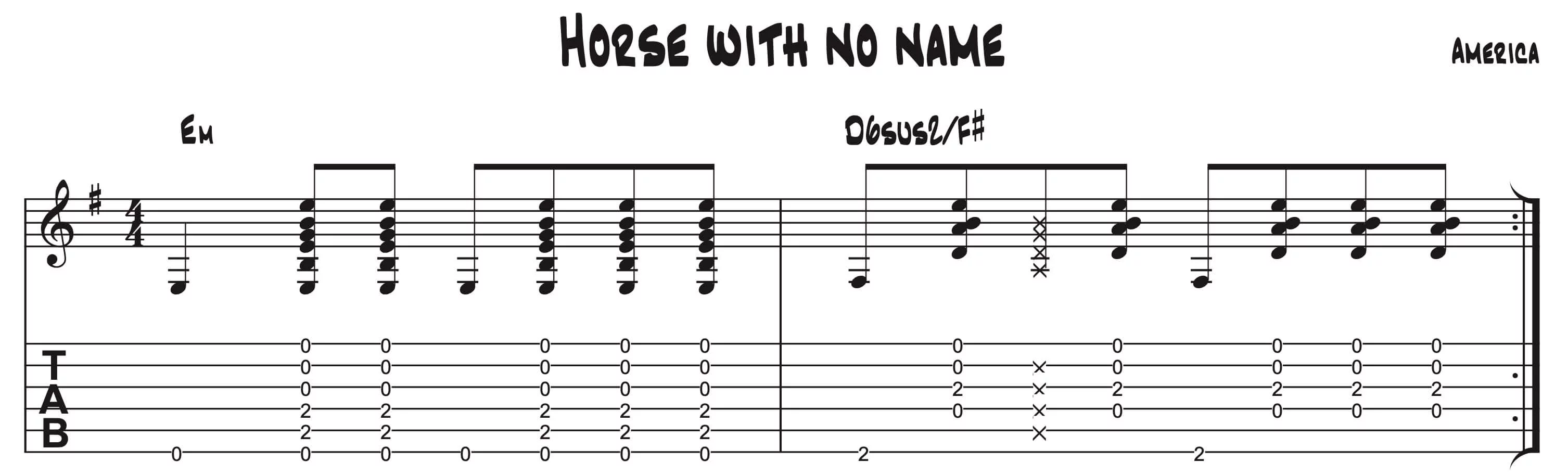
This track is legendary among guitar beginners – and for good reason: it consists of just two chords. The song is particularly great for developing a steady, even strumming technique.
Chords: Em – D6sus2/F# (The second chord sounds complicated, but it actually requires just a tiny shift of your fingers.)
6. Stand By Me – Ben E. King
Why this song is perfect for beginners:
Relaxed tempo
Steady, predictable rhythm
Perfect for backing vocals
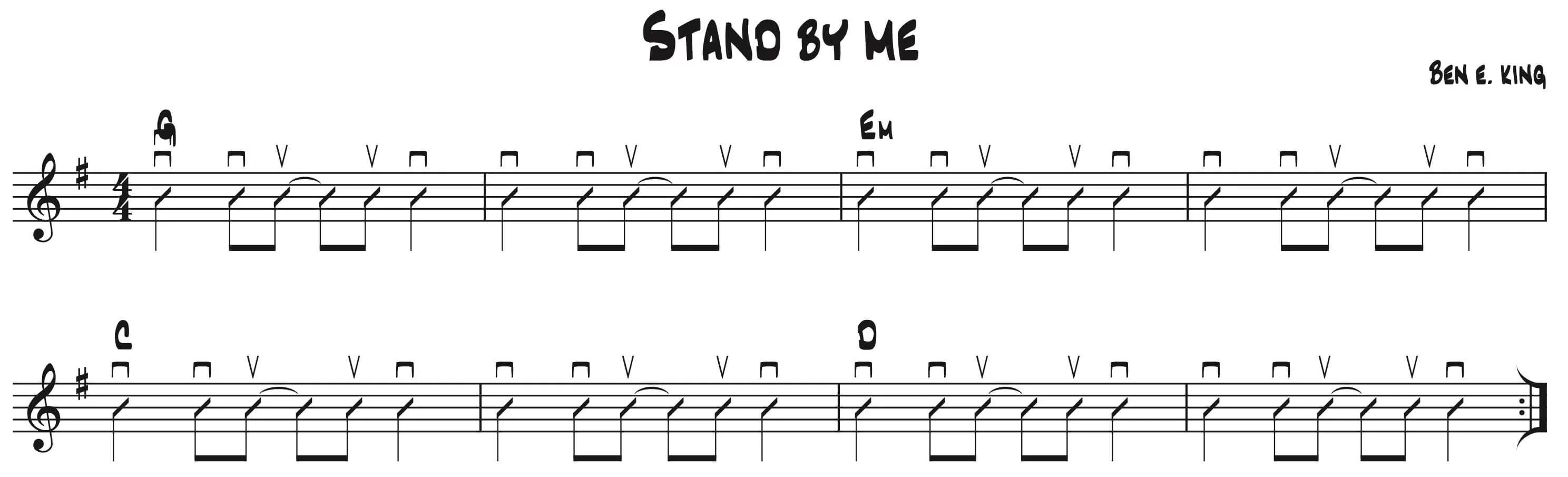
Stand By Me is one of those tracks that works incredibly well with just a few chords. This progression repeats continuously throughout. It also serves as an excellent fingerpicking exercise later on if you want to add some variety to your playing.
Chords: G – Em – C – D
Want to do more than just read about these tracks? Learn to play them properly now!
Learn guitar with music2me!
Do you dream of playing your favourite songs around the campfire or rocking out to the riffs of your heroes? With music2me, you can learn guitar at your own pace – step by step with a system that truly helps you progress, whether you’re a beginner or already advanced.
Over 400 video lessons & downloadable sheet music
Interactive tools like Skill Check & smart practice mode
Weekly live classes & personal teacher support
Exclusive Discord community for motivation & exchange
Free Fallin’ is a modern rock classic built on an amazingly simple framework. The song uses only a few chords and is fantastic for practicing steady, even strumming patterns.
Chords: D – G – Asus4
8. Hey Joe – Jimi Hendrix
Why it's great for beginners:
Exclusively open chords
Moderate tempo for clean transitions
Clear, repeating chord structure
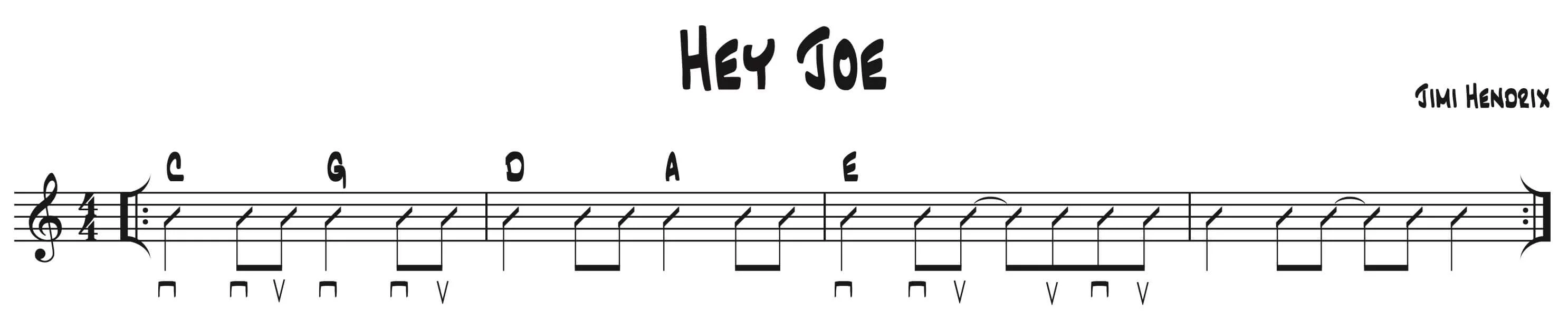
Hey Joe is a genuine guitar staple and, despite its legendary status, surprisingly beginner-friendly. The chord progression is relatively long, but it consists entirely of simple open chords that are easy to grip. Because this sequence loops from start to finish, the track provides the perfect workout for smooth transitions between open chords. Many guitarists start with a basic strumming accompaniment. Later on, you can try your hand at the iconic intro or subtle melodic embellishments.
Chords: C – G – D – A – E
9. Talking ‘bout a Revolution – Tracy Chapman
Why this song is perfect for beginners:
Continuous, repeating chord loop
Energetic strumming pattern with a clear pulse
Strong, driving feel, even with very simple accompaniment
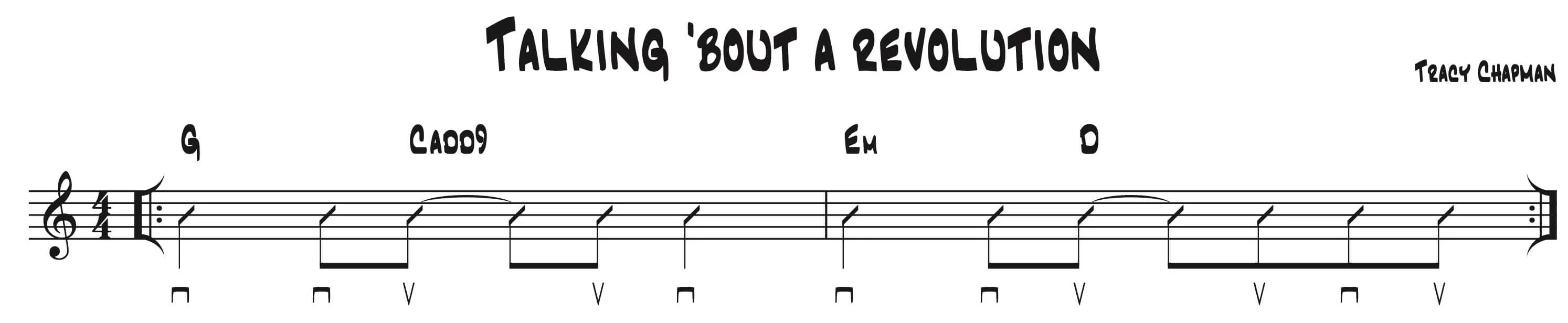
This song is one of the most famous acoustic guitar tracks of the 1980s and works brilliantly as a beginner song with a rhythmic groove. The chords repeat throughout the entire track and can be accompanied by a straightforward strumming pattern. A key part of its appeal lies in the dynamic rhythm, which gives the piece its driving character. Even with a basic accompaniment, the song quickly sounds highly authentic.
Chords: G – Cadd9 – Em – D
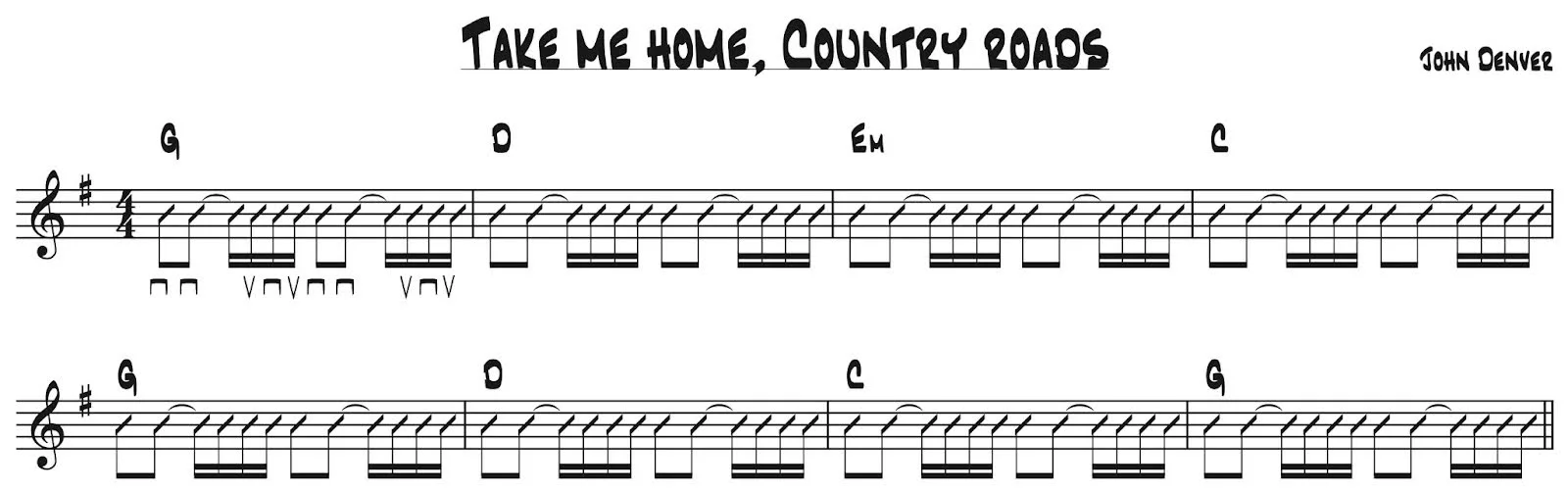
10. Take Me Home, Country Roads – John Denver
Why this song is perfect for beginners:
Continuous, recurring chord loop
Dynamic, rhythmic strumming
Driving feel (even with simple strumming)
This track is an absolute campfire classic and ideal for guitar beginners. While the chords change a bit more frequently, they remain very entry-level friendly. The song is perfect for practicing fluid chord changes whilst developing a feel for song structure and rhythm.
Chords: G – D – Em – C
Tips for Mastering Easy Guitar Songs
To help you make progress as quickly as possible with these tracks, a few simple strategies go a long way:
Play slowly: Especially at the beginning, speed isn't important. Focus instead on clean chords and precise rhythm.
Practise chord changes separately: If switching between two specific chords is tricky, practise them in isolation – for example, moving just from G to C, or Em to D.
Use a simple rhythm: A go-to rhythm for countless songs is the classic campfire strum (Down - Down - Up - Up - Down - Up). You can accompany a surprising number of songs using this single pattern.
Play along with the original tracks: Jamming along to the actual songs helps enormously with your timing and makes practising much more fun.
Why Easy Guitar Songs Are Your Shortcut to Success
Easy guitar songs are the perfect entry point into the world of music. They help you memorise chords, develop a sense of rhythm, and build your very first song repertoire.
The tracks on this list show that you don't need complicated theory to enjoy playing the guitar. With just a few chords, you can accompany many well-known hits. Many beginners can play their first simple song after just a few days or weeks. The key is regular practice and starting with tunes that feature fewer chord changes.
If you practise consistently, you will soon notice that more and more songs become playable. And that is the beauty of the guitar: every new chord combination opens another musical door – why not try our top 5 rock songs next, for example?
Frequently Asked Questions About Easy Guitar Songs
How many chords should I know as a beginner?
With just around 5 basic guitar chords (e.g. G, C, D, Em, and Am), you can play an astonishing number of songs. Many famous pop and rock tracks are built on exactly these chords.
Do I need to read music to play easy guitar songs?
No, not at all! That is the great thing about the guitar. For easy guitar songs, it is completely enough if you can read chord diagrams. Most pop and rock songs are played using these simple chord symbols or tabs (tablature). This means you can get started straight away without having to cram dry music theory first.
Should I learn strumming or fingerpicking for guitar songs?
For beginners, strumming is usually the easier way to start. Many tracks, such as "Wonderwall" by Oasis or "Talking ‘bout a Revolution" by Tracy Chapman, work brilliantly with basic strumming patterns. Fingerpicking can be a wonderful skill to add later on.
Do I need a capo for guitar songs?
You won't need a guitar capo for any of the 10 songs on our list. However, if you want to play along with current pop songs in their original key later on, a capo is a fantastic tool. It simply clamps onto the neck of your guitar, allowing you to keep using your easy basic chords while making the song sound higher overall.
How do I learn to play guitar and sing at the same time?
The trick is to get your guitar playing to a point where it becomes second naturebefore you add the vocals. Practice the easy guitar song (the chords and the rhythm) until you no longer need to look at your hands or can even hold a conversation while playing. Only then should you start humming the melody softly before finally singing the actual lyrics.
Blues is the root of almost all modern music and has produced countless legendary tracks that became immortal on six strings and 88 keys. In this article, we present 10 unforgettable blues and blues‑rock songs every musician should know.
Anyone can learn piano – all you need is the right method, a bit of patience, and a love of music. This guide will take you through the most important basics, from the keyboard layout to note values, time signatures, and your first melodies and chords. With simple exercises and practical tips, you'll quickly see progress – perfect for beginners!