Have you ever wondered how guitarists create those incredibly dynamic, multi-layered sounds where bass, chords, and melody seem to dance simultaneously? The answer is: fingerpicking. This technique isn't just for campfire romance; it’s the secret behind some of the greatest rock anthems of all time. Using your own fingers gives your playing a personal touch and expressive power.
In this guide, we’ll show you everything you need to know to master the art of fingerpicking – from the first steps to legendary rock patterns. All you need is your guitar and your hands!
The Essentials of Fingerpicking at a Glance
Basically: Fingerpicking, also known as fingerstyle, is a playing technique where you pluck the guitar strings directly with the fingers of your picking hand (usually thumb, index, middle, and ring finger) instead of using a plectrum (pick).
Important: The key to a good sound lies in a clear division of tasks for your fingers – the thumb is responsible for the bass strings, while the other fingers play the higher strings for melodies and chord arpeggios.
Tip: Start very slowly and concentrate on clean, consistent plucking. In the beginning, it’s not about speed, but about precision and a feel for the rhythm.
What Actually Is Fingerpicking (or Fingerstyle)?
Imagine your picking hand becoming a small band. Each finger is assigned a specific role, and together you create a full, rich sound. That is exactly what fingerpicking is.
Fingerpicking (or fingerstyle) describes a playing technique for your picking hand. Instead of striking the guitar strings with a plectrum, you pluck the strings individually with your fingers – thumb, index finger, middle finger, and ring finger. The heart of this technique lies in picking patterns that can be repeated and varied.
This plucking technique is particularly popular in genres like folk, blues, or pop, but often reveals its true power unexpectedly in rock. By plucking in an alternating fashion, you can play significantly faster and more complex sequences, lending songs incredible depth and dynamics.
How Do I Apply Fingerpicking?
You play fingerpicking with your right hand (if you are right-handed) – the picking hand. Hold it loosely over the soundhole. The classic finger assignment looks like this:
The thumb plays the three lowest bass strings (E, A, and D string).
Index, middle, and ring fingers are distributed in a logical order across the lower three strings (G, B, and high E string).
You can pluck the strings using just your fingertips or a combination of fingertip and fingernail. The sound differs – try out what you prefer. To pluck, apply slight pressure to the string and then let the finger glide over it. The movement goes towards the palm of the hand; your fingers curve slightly. The thumb remains straight and strikes downwards, moving past the other fingers.
Tip: Pluck the strings with a movement originating from the base knuckles of your fingers. The power shouldn't come from the entire hand or the wrist.
Learn guitar with music2me!
Do you dream of playing your favourite songs around the campfire or rocking out to the riffs of your heroes? With music2me, you can learn guitar at your own pace – step by step with a system that truly helps you progress, whether you’re a beginner or already advanced.
Discover guitar course now
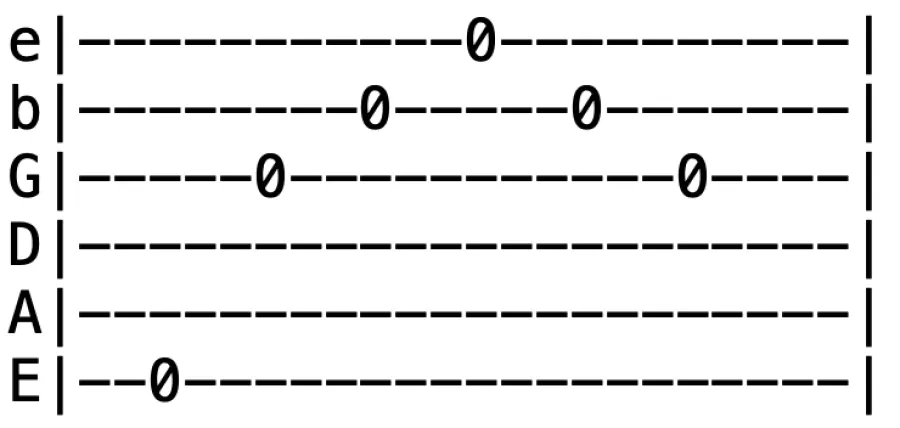
A Simple Fingerpicking Pattern as a Tab
The pattern is the defining feature of fingerstyle. We have selected a perfect basic pattern for you to get started: The intro to "Nothing Else Matters" by Metallica.
With your thumb (1), pluck the low E string.
With your index finger (2), pluck the G string.
With your middle finger (3), pluck the B string.
With your ring finger (4), pluck the high E string.
With your middle finger (3), pluck the B string again.
With your index finger (2), pluck the G string again.
Tip: If you want to deepen your understanding of the basics, check out our magazine article on reading tabs or our complete guide to learning guitar in 10 steps.
Fingerpicking in Rock: The Secret Weapon of Legendary Guitarists
Many people associate fingerpicking with gentle ballads, but the technique is deeply rooted in the DNA of rock and has produced some of the most unforgettable riffs in music history. Legendary guitarists have deliberately set aside the plectrum to shape their unique sound:
Mark Knopfler (Dire Straits): His unique style, plucking an electric guitar with his fingers, defined the sound of hits like "Sultans of Swing". He proves that fingerpicking can be incredibly funky and energetic.
Lindsey Buckingham (Fleetwood Mac): His energetic and percussive fingerpicking is the heart of songs like "Landslide" or "Never Going Back Again".
Jeff Beck: As a master of innovation, he used his fingers to manipulate his guitar's controls while playing, creating sounds that resemble a human voice.
Are you ready for a challenge? These rock songs are milestones of fingerpicking:
"Stairway to Heaven" - Led Zeppelin: The intro is perhaps the most famous fingerpicking arpeggio in the world.
"Dust in the Wind" - Kansas: A prime example of "Travis Picking", where the thumb plays a constant alternating bass.
"Tears in Heaven" - Eric Clapton: An emotional ballad built on gentle and artistic fingerpicking sixstringfingerpicking.com.
"Don't Think Twice, It's All Right" - Bob Dylan: Although coming from folk, this song has influenced countless rock musicians.
Learn over 70 rock songs and riffs with music2me!
Ever dreamed of playing the songs of your heroes? Our "rock songs & riffs" module is your gateway into the world of rock guitar. From timeless rock anthems and grunge classics to modern riffs, our easy-to-follow video lessons show you how to truly rock using essential techniques like bending and slides.
5 Tips for Fingerpicking
Use Alaska Fingerpicks:
Some fingernails simply aren't made for fingerpicking. Fortunately, there are plastic fingerpicks for such cases. You place these on your fingers to replace the actual fingernail.
Keep the fingernails on your picking hand short:
Fingernails that are too long or not filed smoothly can make guitar strings sound scratchy. So, cut the fingernails on your picking hand short, but not too short. A combination of the fingertip and a smoothly polished nail produces the best tone.
Pluck and release:
Pluck the strings briefly and let go. Do not leave your finger resting on the strings just to avoid losing your sense of positioning. The tone of the plucked string needs to ring out.
Divide your fingers across the strings:
Divide the work clearly among your four fingers. The thumb handles the bass strings, the index finger the G string, the middle finger the B string, and the ring finger the high E string.
Start slowly:
Concentrate first on clean tones and a steady rhythm. Speed will come all by itself with time.
Alternatives: Flatpicking & Hybrid Picking
In flatpicking, you strike individual strings with a plectrum, which is often used for fast melody lines in bluegrass or country.
An exciting hybrid form is hybrid picking: Here, you hold the plectrum between your thumb and index finger for the bass strings and simultaneously pluck the high strings with your middle and ring fingers. This technique is extremely versatile and is used by many modern guitarists to combine the best of both worlds.
Your Path to Becoming a Fingerpicking Master
Fingerpicking is a journey, not a shortcut. It requires patience, but the reward is huge: you will be able to interpret your favourite songs in an incredibly personal and expressive way. You don’t need an orchestra behind you when your fingers become the band. Start with simple patterns, listen closely to the masters, and above all, have fun making the strings sing.
Frequently Asked Questions About Fingerpicking
What is the difference between fingerpicking and fingerstyle?
Basically, both terms mean the same thing. "fingerpicking" is often used for pattern-based accompaniments (like in Folk or Blues), while "fingerstyle" sometimes describes more complex arrangements where melody, bass, and harmony are played simultaneously. However, in general usage, they are interchangeable.
Do I need a specific guitar for fingerpicking?
No! You can play fingerpicking on any guitar – acoustic guitar (steel or nylon strings) or electric guitar. The sound will, of course, differ.
How long does it take to learn fingerpicking?
You can learn the basics and your first simple songs in just a few weeks if you practise regularly. To truly master the technique, as with any instrument, takes months and years of dedication.
Is fingerpicking harder than strumming?
It is different. Strumming requires a good sense of rhythm for the entire hand. Fingerpicking requires the coordination and independence of individual fingers. For most beginners, the coordination involved in fingerpicking is the bigger challenge initially.
Can I also pluck with my little finger (pinky)?
Yes, that is possible and is practised in advanced fingerstyle, especially in Flamenco. However, for the beginning, you should concentrate on the thumb, index, middle, and ring finger, as this is sufficient for 99% of songs in rock, pop, and folk.