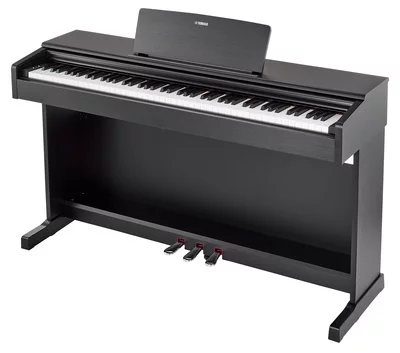
Are you looking for your first digital piano and wondering whether this popular model from the Arius series is worth the investment? In our detailed Yamaha YDP-145 review, we put the instrument through its paces. For just under £1,000, it promises the perfect blend of authentic feel, superb sound, and modern technology. Read on to find out if it lives up to expectations and how it can help you learn the piano!
The Essentials of the Yamaha YDP-145 at a Glance
In brief: The Yamaha YDP-145 is an excellent home piano for beginners and the smaller sibling of the YDP-165, available for under £1,000.
Important: It scores points with its proven GHS keyboard, the brilliant sound of the CFX concert grand, and a built-in USB audio/MIDI interface.
Top tip: Make sure to use the free Smart Pianist app to easily control the piano’s otherwise minimalist settings straight from your tablet or smartphone.
Pros and Cons of the Yamaha YDP 145
To help you make an informed decision, we have summarised the key takeaways from our Yamaha YDP-145 review:
Pros
Cons
Excellent value for money (under £1,000)
No built-in Bluetooth (cable connection required for app usage)
High-quality CFX concert grand sound with impressive dynamic range
Very minimalist control panel on the instrument itself
Reliable and authentic GHS keyboard
A rare feature in this price range: Built-in USB audio/MIDI interface
Intuitive control via the Smart Pianist app
Spoilt for Choice: B, WH, or R? Comparing the Models
When browsing for the Yamaha YDP-145, you will notice various letter codes. Don’t worry: technically, there is absolutely no difference between these instruments. The features, keyboard, and sound are identical across all options. The suffixes simply refer to the cabinet finish:
Yamaha YDP-145 B (Black Walnut): The timeless classic in matte black with a subtle wood grain – fits seamlessly into almost any room and remains the most popular choice.
Yamaha YDP-145 WH (White) & R (Rosewood): The alternative finish options in white and rosewood.
Want to experience the Yamaha YDP-145 for yourself? Check out the popular Black Walnut model at our trusted retailer, Thomann:
Sitting down at the Yamaha YDP-145 for the first time, you immediately notice that it has been designed with beginners in mind. Beyond its elegant, traditional look, it impresses from the very first keystroke. The sound fills the room effortlessly and offers impressive dynamics. From delicate whisper-quiet passages (pianissimo) to rich, powerful lines (forte), the overall balance remains pristine. You can feel that signature Yamaha clarity right away, which makes you want to keep playing.
The Proven GHS Keyboard in Detail
One of the main differences compared to the more expensive YDP-165 is the keyboard action. The YDP-145 features Yamaha’s renowned Graded Hammer Standard (GHS) keyboard. Interestingly, it uses the exact same key action as its direct predecessor, the YDP-144. Why did Yamaha stick with it? Simply put: if it isn’t broke, don’t fix it. The GHS action responds reliably and accurately. It offers a slightly heavier feel in the lower register and a lighter touch in the higher notes – just like a genuine acoustic piano. The keytops provide good grip, feel compact, and give you a confident playing experience right from the start.
Sonic Marvel: The Yamaha CFX Concert Grand Sound
The real highlight in our Yamaha YDP-145 review is the substantial sound upgrade. Yamaha has packed in the premium tone of its world-famous CFX concert grand piano. The interplay between the GHS keyboard and this upgraded sound engine is outstanding. There is far more expression in every note. When you play with power, the instrument responds with a sparkling tone that rolls off the fingers with effortless ease. Alongside the brilliant acoustic grand, you also get classic electric piano tones and other high-quality voices that sound remarkably authentic.
Operation: Smart Pianist App & USB Audio/MIDI
The physical control panel on the instrument itself is minimalist. While this is entirely standard for digital pianos in this price bracket, navigating through sounds directly on the piano can feel slightly clunky. The solution? The brilliant Smart Pianist app (available on iOS and Android). Using the app, you can visually tweak your digital piano’s settings directly from your smartphone or tablet. Simply swipe across the screen to switch from concert grand to pop grand, adjust reverb settings, or load up lead sheets and sheet music.
One minor downside: the YDP-145 does not feature Bluetooth, so you will need to connect your device via USB cable. On the upside, the instrument includes full USB audio/MIDI functionality – an absolute rarity at this price point! This USB audio feature makes the Yamaha YDP-145 ideal for online music courses like music2me. Connect your tablet or smartphone to the piano via a USB cable, and the audio from your video lessons and backing tracks plays directly through the piano's high-quality speakers. That means you can listen to your teacher’s instructions perfectly blended with your own playing – without needing extra speakers or messy headphone setups!
Learn piano with music2me!
Imagine sitting at the piano, your fingers gliding effortlessly across the keys as you play melodies that move your heart. With music2me, you can learn piano at your own pace – step by step with a system that truly helps you progress, whether you’re a beginner or already advanced.
Over 400 video lessons & downloadable sheet music
Interactive features like our smart practice mode and gamification
The Yamaha YDP-145 is a classic console-style home piano. That means the sturdy wooden stand, music rest, and essential triple-pedal unit are built-in and included in the box. You won’t have to worry about a wobbly keyboard stand or sliding foot pedals.
However, a few small but important items aren’t included in the standard box. We recommend budgeting for the following accessories:
The Right Piano Bench Good posture is vital when learning the piano. Standard dining chairs rarely cut it because they aren’t height-adjustable. Investing in a solid, height-adjustable piano stool ensures you stay comfortable and maintain a healthy posture while practising.
A Good Pair of Headphones for Practice One of the biggest advantages of owning a digital piano is silent practice. Standard smartphone earbuds rarely deliver full sound quality, so it’s well worth picking up a good pair of closed-back over-ear headphones. Make sure they include a 6.35 mm (1/4 inch) jack adapter, as the YDP-145 features two of these standard large headphone sockets.
The Right USB Cable As mentioned earlier, you will need a suitable cable to connect your device to the Smart Pianist app or online platforms like music2me. Depending on your tablet or smartphone, you’ll need a USB cable (USB-A to USB-B or USB-C to USB-B) or an Apple Camera Connection Kit adapter for your iPad.
Tip: Many retailers offer complete bundle deals that include a matching piano bench and headphones at a discounted package price. Take a look at the packages on Thomann:
The Yamaha YDP-145 is a straightforward, honest, and highly capable beginner piano. While its price has risen slightly compared to older models, it delivers everything you need for a successful start to your musical journey. With its outstanding sound engine, solid key action, strong brand reputation, and seamless integration with the Smart Pianist app, it stands out as a top choice in the sub-£1,000 category. If you want a dependable instrument that will bring you joy for years to come, you can buy with complete confidence. An all-round winner!
Technical Specifications Overview
Feature
Details
Keyboard
88 keys, Graded Hammer Standard (GHS) action with matte black keytops
Tone Generation
Yamaha CFX Concert Grand Sound
Polyphony
192 notes
Speakers
2 x 8 W (12 cm x 2)
Display
None (operated via keys or the Smart Pianist app)
Weight
38.0 kg
Dimensions (W x D x H)
1,357 x 422 x 815 mm (height with music rest raised: 969 mm)
Frequently Asked Questions About the Yamaha YDP-145
Who Is the Yamaha YDP-145 Best Suited For?
This piano is primarily designed for beginners and ambitious learners who want a proper home digital piano with an authentic feel without spending a fortune.
Can I Connect Headphones to the Yamaha YDP-145?
Yes, the digital piano features two standard headphone outputs. This allows you to practise silently at any time without disturbing neighbours or housemates, or even play duets with a teacher.
How Difficult Is It to Assemble the Yamaha YDP-145?
Don't worry – you don’t need to be a DIY expert! The piano arrives flat-packed in a large box and requires basic assembly. Setting up the stand and pedal unit with the included manual is straightforward and takes around 30 to 45 minutes. Tip: Because the main keyboard unit is relatively heavy (the total weight is 38 kg), it’s best to have two people available when lifting it onto the stand.
Does the Yamaha YDP-145 Have Real Pedals Like an Acoustic Piano?
Yes, absolutely! It comes with a built-in 3-pedal unit (Damper, Sostenuto, and Soft). Crucially for developing proper technique, the sustain (damper) pedal supports half-pedalling. This allows you to control the sustain and resonance with subtle precision, just as you would on an acoustic grand piano.
What Is the Difference Between the YDP-145 and the YDP-165?
The main differences lie in the key action and speaker system. The more expensive YDP-165 features the higher-grade GH3 keyboard with synthetic ivory/ebony keytops and a more powerful speaker setup. However, for beginners, the GHS action on the YDP-145 is more than adequate.
Blues is the root of almost all modern music and has produced countless legendary tracks that became immortal on six strings and 88 keys. In this article, we present 10 unforgettable blues and blues‑rock songs every musician should know.
Anyone can learn piano – all you need is the right method, a bit of patience, and a love of music. This guide will take you through the most important basics, from the keyboard layout to note values, time signatures, and your first melodies and chords. With simple exercises and practical tips, you'll quickly see progress – perfect for beginners!





 Pros
Pros Cons
Cons